
Basics of Bitcoin Wallets for Beginners
The Bitcoin wallet is a digital instrument for investment in bitcoins through which you can take advantage of items similar to traditional banks. But instead of keeping bitcoins, you keep them in the cryptocurrency platform like bitcoin casinos.
Whereas normal bitcoins do keep private keys that apply for accessing and controlling their digital tokens, this feature provides a secure, fast, and convenient conversion of digital assets.
Overview Of Bitcoin Wallets For Beginners
It is imperative for those who have just begun to use Bitcoin to understand that the basics of Bitcoin wallets are the foundation for their exploration of the world of Bitcoin.
A Bitcoin wallet can be regarded as a digital wallet that enables the storage, forwarding, and receiving of bitcoins. The digital wallets are available as software, hardware, and even printable versions. All of the types provide various levels of protection.
In the first place, the learners are advised to choose a wallet that maintains a high level of usability and, at the same time, mustn’t compromise on safety, such as having encryption and backup options. Knowing how a cryptocurrency wallet functions and picking the right one will help you improve the protection as well as the convenient access to your coin holdings.
How Does A Bitcoin Wallet Work?
A Bitcoin wallet works by generating and storing pairs of cryptographic keys: an address or public key for receiving bitcoins and a private key that can be used to access and bypass them.
The user use bitcoins, sending a transaction using their private key; however, the network takes charge of that verification process after using their public key. Later, the deal is entered and stored in the blockchain, which is a decentralized, shared ledger for all Bitcoin transactions.
Customers can engage with their Bitcoin holding files only by using their private key, where signatures of transfers and transactions are added, which proves ownership and transfers the funds securely. Fundamentally, the wallet protects users’ keys, allowing them to do such operations as sending funds, receiving, and storing bitcoins in a secure manner.
Bitcoin Wallet Varieties For Beginners
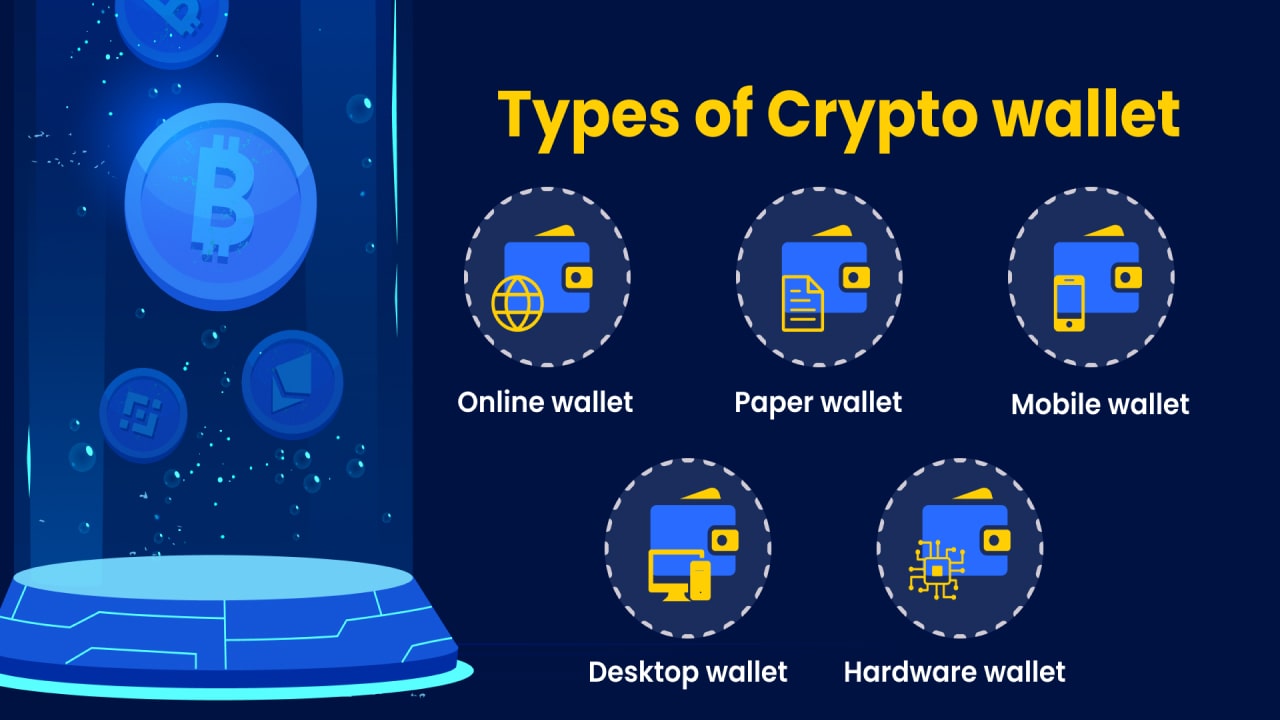
Prior to exploring types of Bitcoin wallets for beginners, it is essential to comprehend a wide range of choices for protecting your digital assets. Selecting a proper wallet is extremely important for security, accessibility, and ease of use when dealing with your Bitcoin stock. Let’s look at different types of wallets appropriate for newbies to the cryptocurrency world.
Hot Wallets
Hot wallets are digital wallets that are connected to the internet, making them more susceptible to hacking and online threats. They provide convenient access to cryptocurrency funds for regular transactions. Here are the common types of hot wallets:
- Desktop Wallets: These wallets are software applications installed on desktop computers or laptops. They offer users full control over their private keys but are vulnerable to malware and hacking if the device is compromised.
- Mobile Wallets: Mobile wallets are smartphone applications designed for easy access to cryptocurrency funds on the go. They are convenient but can be risky if the device is lost or stolen.
- Web-Based Wallets: Also known as online crypto wallets, these are accessible through web browsers and are often provided by cryptocurrency exchanges. While convenient for trading, they pose security risks due to reliance on third-party platforms and potential vulnerabilities in online security.
Cold Wallets
Crypto Cold wallets refer to offline storage solutions for cryptocurrencies, providing enhanced security compared to hot wallets. Here are the common types of cold wallets:
- Paper Wallets: Paper wallets involve printing out private keys and addresses on a physical piece of paper. They are immune to online hacking but require careful handling to prevent physical damage or loss.
- Hardware Wallets: Hardware wallets are physical devices specifically designed for storing private keys offline. They offer a high level of security by keeping the keys isolated from internet-connected devices, minimizing the risk of unauthorized access or theft.
What Is A Paper Wallet?
A paper wallet is a way of producing offline addresses by printing the public address and private key on a sheet of paper, which is one of the cases of cold storage for cryptocurrencies like Bitcoin.
This management method allows the storage of digital assets in an offline manner, thus, away from the exposure of the threats encumbering online channels. Typically, paper wallets are generated with software or special websites that create a pair of keys called private keys (used for holding funds) and public addresses (receiving funds).
After these pins are printed out, users can choose to print them on paper and ensure that they are stored in a secure location, such as a physical safe or vault. Instead, paper wallets are hardware-based and thus immune to unwanted attacks like hacking, while the problem of possible physical damage, loss, or stealing can occur due to the current wallet handling methods.
The generation of best crypto wallets is critical, and this shall be done on credible and secure devices while also assuring that backups are safely stored to prevent the chance of losing access to funds. In fact, traditional paper wallets are rather straightforward and simple tools for storing cryptos offline.
What Is A Hardware Wallet?
A hardware wallet is a tangible device that was built to keep private cryptocurrency keys away from the internet risk, transferring the operation to a more protected platform. Unlike software wallets that may be hacks prone, hardware wallets have their private keys isolated from computers so that they can be accessed online. Therefore, they minimize the risk of security threats such as unauthorized access and hacking.
Normally, they are designed to look like flash memory and are accompanied by safety technologies, including encryption, to keep users wealthy. For transactions, users connect the hardware wallet to a computer or mobile app, confirm the withdrawal via physical buttons or touchscreen interface, and then disconnect the device from the internet.
Hence, it allows users to be sure that their private keys are safe from cyber threats. Hardware wallets are considered a good solution for the safe storage of huge amounts of cryptocurrency over time, as they provide advanced security features that make it impossible to hack online. Though they are not free of charge, they will provide peace of mind and ensure the safekeeping of cryptocurrency projects that their respective investors spend on them.
What Is A Desktop Wallets?
A desktop wallet is a software program installed on a desktop computer or a laptop that enables users to store and send crypto coins such as BTC. In contrast to online wallets, desktop wallets give their owners full control over private keys, and there is also an offline storage possibility, which results in a more secure system.
The user can manage their cryptocurrency directly on their desktop, and the convenience of this direct control makes desktop wallets an attractive option for those who are keen on having their funds accessible on their personal device but also remain in control of their security measures.
How To Select Your First Bitcoin Wallet
Deciding on your first digital wallet comes with certain attributes that include security, accessibility, and convenience. Firstly, decide whether you are in favour of a hot wallet, which provides the ease of online access, or a cold wallet, which has better security.
Spotlight the reputation of the wallet, as well as its multi-signature support and backup options, and then make sure it is compatible with your devices.
Study all types of wallets, for example, software, hardware, and paper wallets, to identify the top one for your demands and likes. Besides that, also keep in mind things like customer support, community trust, and user reviews to make sure your Bitcoin management experience is good and hassle-free.
What To Consider In A Crypto Wallet
When choosing a crypto wallet, there are several important factors to consider to ensure the security, usability, and compatibility of your digital assets. Here are key aspects to look for in a crypto wallet:
- Protective Features: While security is the main priority when it comes to cryptocurrency storage, it isn’t always foolproof. Smartphones are often targeted for theft because they are a more valuable device than a traditional dumb phone. Whenever you purchase a new phone, it is important to find a wallet that offers robust protective features such as two-factor authentication (2FA), biometric authentication, strong encryption, and secure backup options. Hardware wallets are probably considered the most secure as they keep the private keys away from the network, making them more resistant to online hacking attempts.
- User-Friendly Design: Nevertheless, an easy-to-use interface is the key to good and convenient browsing/shopping for users. An ideal wallet interface should be anywhere easy to work around; even a newcomer can follow without any given instruction; hence, better wallet designs incorporate all such features. I would say that the Trust Wallet or the Atomic Wallet are the hot choices for mobile users due to the nice interfaces they have and the ease of use they provide.
- Compatible Platforms: It is paramount to ensure that the wallet you confirm is simply compatible with the platforms you seek to use it on. For instance, you can go for either offline or online wallets, and these can be selection criteria by the operating system on which the device runs (Windows, macOS, iOS, Android, etc.) to have complete access to your funds across different devices.
- Backup Solutions: The existence of an effective backup system is important to prevent you from losing your cryptocurrency funds owing to device failure or a loss of your device. When there is a walking problem, search for the wallets that support the backup option, such as seed phrases and private key backups. The wallet storage keeps backups, letting you access them from one device and giving you the power to regain control of your funds in case of emergency situations.
- Anonymity: The privacy is and protect your identity are the important factors of many cryptocurrency holders. Certain wallets stand out with privacy-focused approach by skipping the account set up process through inputing of personal data or when privacy features like coin dividing are implemented. Think of wallets that follow your confidentiality preferences or suggest that offer you some unique features that keep you hidden.
- Market Reputation: Research the standing of the wallet provider’s reputation in the cryptocurrency community. Check reviews, comments by other users, and the security record of the wallet to hear about its past experiences. There are wallets that were built on impeccable reputations and have an established presence when it comes to digital asset storage. They are more likely to provide a secure and trustworthy platform to store your father’s money.
In conclusion, when selecting a crypto wallet, prioritize protective features, user-friendly design, compatibility with your platforms, backup solutions, anonymity options, and the wallet’s market reputation. By considering these factors, you can choose a wallet that meets your needs for security, usability, and peace of mind when managing your cryptocurrencies.
Bitcoin Wallet Security Essentials
Ensuring the security of your Bitcoin wallet is very important to save your digital assets from any offline threats via computers or online platforms.
Software Updates
Your Bitcoin wallet software should be updated at all times to ensure its security and avoid any function deterioration. Software enhanced is frequently used to eradicate bugs and security leaks, and hence, the efficiency of the e-wallet is boosted.
Keeping your wallet’s software updated will, in effect, mitigate the occurrence of vulnerabilities that attackers might use. To save you software updates, make sure your wallet gets checked automatically for updates and installs them when they are released.
What is more, think about creating options for automatic backups of your wallet so that your funds were not going to get lost in case of errors or emergency during the updating.
Multi Signature Wallets
Multi Signature wallets are tools that enhance security by requiring more than one signature (or key) in order to approve a transaction. Therefore, the multi-verification mechanism ensures that your funds do not fall into the wrong hands, or get stolen by one party’s approval.
The protocol of Multi Signature Bitcoin wallets can be set up in different ways like two by five signature (2-of-5) or three out of three signature (3-of-3) as well. The use of this kind of configuration makes it possible for an attacker to steal only if they have one key and if they want to access your funds. To set up a multi-signature wallet, you’ll need to generate several private keys and assign each one to a specific device or player.
They then have a way of finding out at each step whether all the key holders have consented to a transaction or not. With an added layer of security in place, you can rest assured that your assets are safe and adequately protected against possible dangers.
Two Factor Authentication (2Fa)
Two-factor authentication (2FA) is a security option that adds one more security measure to your Bitcoin wallet to safeguard it. It has a security feature that demands users to input two identification documents in order to access their wallets.
The first element involves a password or PIN, while the second factor is usually a one-time code delivered through an app on the authenticator or SMS. By obtaining 2FA, you make it impossible for someone to fraudulently access your Bitcoin wallet. In the case that someone gets hold of your password information, they still need to acquire a second factor to have access to any of your cryptocurrency funds.
Besides the fact that it is an extra layer of protection against malicious parties, it also helps secure your Bitcoin from hacking attempts and other security lapses.
Regular Backups
It is, therefore, advisable to have frequent backups for safekeeping the security and availability of your wallet. Backup refers to the copy of your wallet’s private key or seed phrase that one can use in case they have no access to it.
You also need to be sure that sometimes you back up your Bitcoin and keep the backup in a secure location. Then, you will be able to restore your Bitcoin in case of device breakdown, loss, or theft. While generating a backup, it’s crucial to adhere to good practice to keep uninvited interruptions of your Bitcoin activity at bay.
Store the backup in a secure location away from the fire, i.e. a password-encrypted digital vault or a physical safe box. Use different locations to store your backups because, if someone hacks your wallet, there are high chances of your backups being hacked together.
Final Thoughts
Finally, to sum up, knowing the fundamental aspects of Bitcoin wallets is crucial amidst everyone’s ongoing journey in the vast arena of cryptocurrency. The working of the Bitcoin wallet is similar to the normal process undertaken by the bank’s systems, including sending and receiving bitcoins.
Traditional wallets are designed specifically to store physical currency. However, Bitcoin wallets store digital tokens as well as private keys on which the transactional process in the cryptocurrency world is based. This ensures secure, fast, and convenient transactions in the digital cryptocurrency domain.
FAQs
-
What is a Bitcoin wallet, and how does it work?
A Bitcoin wallet stands for a virtual application that amends the insurance of cryptocurrency owners to hold, transmit, and receive digital currency. It is comprised of an address for receiving funds and a private key for confirming the transaction.
When the calculation tries the new level of Bitcoin, the transaction is signed with the private key and is sent to the network to undergo the verification process. Bitcoin wallets form diverse groups, namely, hardware wallets, software wallets, mobile wallets, or web wallets; they all have different levels of security and convenience.
-
What are the security measures to consider when using a Bitcoin wallet?
When using a Bitcoin wallet, it is essential to implement robust security measures to protect your funds. Some key security practices include using strong passwords, enabling two-factor authentication, keeping your private keys secure and offline, regularly updating your wallet software, avoiding phishing scams, and using reputable wallet providers. Additionally, storing backups of your wallet and being cautious with public Wi-Fi networks can help enhance the security of your Bitcoin holdings.
-
How to choose the best Bitcoin wallet for a beginner?
For beginners entering the world of Bitcoin, choosing the right wallet is crucial. Factors to consider when selecting a wallet include ease of use, security features, customer support, compatibility with your devices, reputation in the community, and whether you prefer a hot or cold storage solution. Popular beginner-friendly wallets include Coinbase (for beginners in the US), Exodus (for desktop users), and Trust Wallet (for mobile users), offering user-friendly interfaces and solid security features.
-
What is the best Bitcoin wallet?
The best Bitcoin wallet may vary with everyone else since an individual may choose the one that suits him in all respects. Some of the most popular wallets broadcasted as secure and friendly user experience dealers are cold wallets Trezor and Nano Ledger S plus software wallets for desktop users who prefer convenience, such as Electrum and Exodus. In plus, we have mobile wallets, Trust Wallet, and Mycelium for fast access. It is paramount to research different types of wallets that meet one’s needs and then select from them.
-
Are Bitcoin wallets anonymous?
Transactions are not hidden in Bitcoin wallets as they are recorded publicly in the blockchain, and the transactions can be tracked by a certain person. Nevertheless, a layer of privacy can be maintained by generating a new address for every transaction and mixing them up using CoinJoin and other sending services. Bitcoin is an anonymous coin, only pseudonymity rather than anonymity, but performing sound privacy habits can enhance the privacy of cryptocurrency wallets.