
Who Is The Creator Of Bitcoin?

The person who created Bitcoin never revealed their true name, and Satoshi Nakamoto still remains their pseudonym.
In 2008, a white paper titled “Bitcoin: “A Peer-to-Peer Electronic Cash System” was coined, which resulted in an elaboration on the concept of a decentralized digital currency. Nakamoto, the real name of which was not disclosed, created the first Bitcoin software, becoming the progenitor of the cryptocurrency world one year later.
Confusion arises as people try to who created bitcoin and who is behind the nom de plume ‘Nakamoto.’ Some claims Nakamoto could be an individual, but other scientists advise that there is a chance of a group perpetrating the crime thinking is Bitcoin legal?
Over time, many people had been considered Nakamoto, including the computer scientists, economists, and even some businesspeople as who created bitcoin, but not a single conclusive evidence had emerged. Notwithstanding the anonymity, it is no longer disputable that Nakamoto has fundamentally played a role in shaping the global finance architecture.
Bitcoin brought to life the concept of ‘blockchain’ technology, a decentralized ledger that is used as an underlying basis for the safety and functional operation of cryptocurrencies. Because Bitcoin is decentralized, it is not governed by anyone, and the potential to not trust a system that is based on mediators like commercial banks and governments is eliminated.
Irrespective of who Nakamoto is, Bitcoin has irreversibly shaped the future of the world. It has ignited another financial revolution, motivating the development of many dozens of alternative cryptocurrencies and spurring further development of blockchain technology.
Bitcoin’s decentralization throws a challenge to traditional financial models because of which it can lead to a future where individual users have more power over their finances and can directly conduct transactions without the intervention of the intermediaries.

Who Was Behind The Creation Of Bitcoin?
In 2008, a whitepaper titled “Bitcoin: In the year 2008 an article called:’ A Peer-to-Peer Electronic Cash System’ was published by the unidentified author Satoshi Nakamoto. The reveal of Nakamoto’s identity has never been clear.
Hence, so much attention and mystery is invested in who created bitcoin by the crypto community and others. Some theories argue that Satoshi Nakamoto is a name for an individual, and for others, then it may refer to a group of people working together under the same personification. Nakamoto and his identity have been a mystery that is constantly trying to be cracked, but no actual proof has been forthcoming until now.
The fact that Nakamoto was the one who created bitcoin and named Bitcoin, which changed the concept of digital currency, is well-known. The Bitcoin system, with a decentralized phase based on blockchain technology, has enabled people without banks or governments to make transactions with each other. This invention was the starting point for many other cryptocurrencies and served as an inspiration to decentralized finance the world over.
Being a mystery to whoever Satoshi Nakamoto is or what their gender or nationality is, Bitcoin has taken an important role, which has sparked worldwide debates, technological inventions, and investments that are shaping the future of digital currencies.

Who Stands Behind The Name Satoshi Nakamoto?
Satoshi Nakamoto is one of the most enigmatic figures in modern history, with Bitcoin, the worldwide cryptocurrency, and blockchain development being the only known acts attributed to him. While Bitcoin is used extensively by millions of people worldwide today and has permanently revolutionized the financial world, the person who created it, Satoshi Nakamoto, still remains a mystery.
Lots of theories exist, including the creator, who can be either an individual or a group called Satoshi Nakamoto. These speculations sometimes indicate that the person might be only one, and other times, it could be a team of individuals.
Amongst many others, a convincing record of the feasibility of candidates, including computer scientists, cryptographers, and entrepreneurs, has been discussed.
A prominent example of such a person is Hal Finney, an adept of digital currencies who was among the first Bitcoin supporters and received transaction number one from Satoshi Nakamoto. A second candidate is Nick Szabo, a computer scientist who is known for his work on a “bit gold” concept, which is essentially similar to what Bitcoin is today.
Although many people have their own ideas about who created bitcoin, there has been no proof at all to make someone really parallel to Satoshi Nakamoto. The motivation of the mysterious genius behind cryptocurrency is not well-known, further clouds the background and curiosity about the birth of Bitcoin and the decentralized revolution it has ignited.
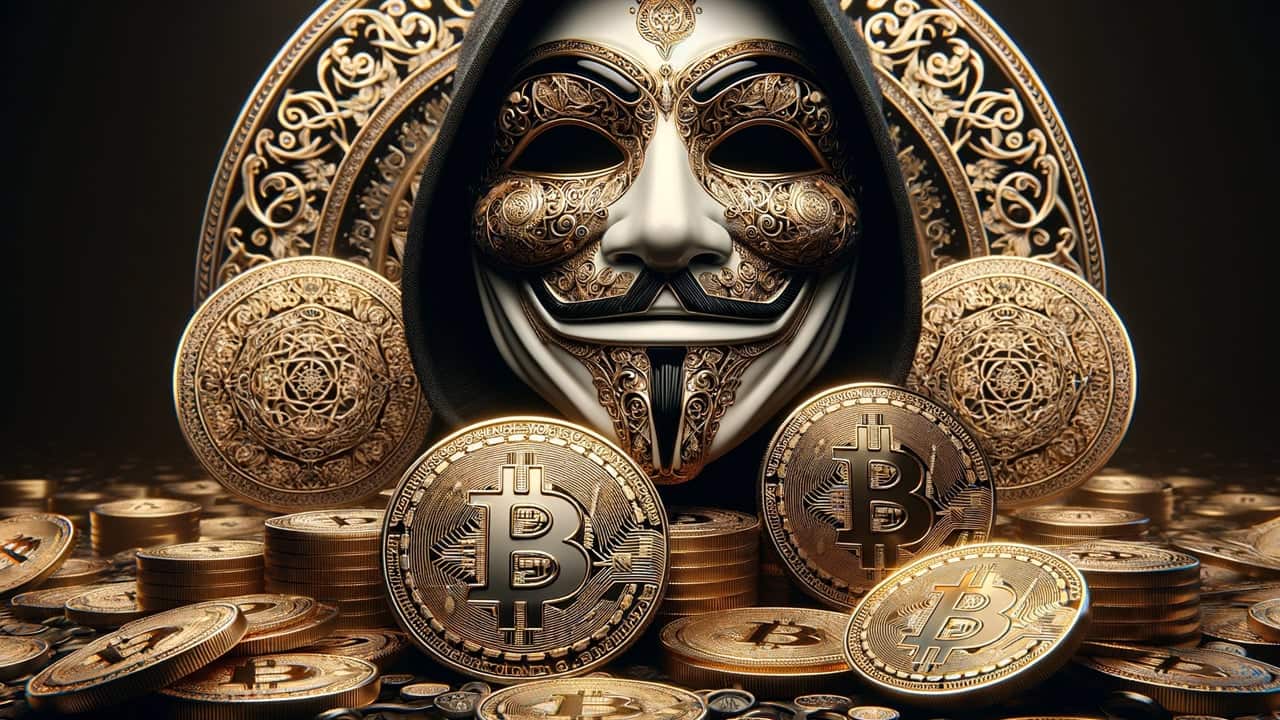
Satoshi Nakamoto’s Identity And Bitcoin
The enigmatic figure of Satoshi Nakamoto who created Bitcoin, the pioneering cryptocurrency that ignited a financial revolution. Despite being a pseudonym, Nakamoto’s identity remains shrouded in mystery, adding an aura of intrigue to the birth of this digital currency.
Nakamoto’s decision to remain anonymous aligns with the decentralization ethos embedded within Bitcoin’s framework.
- Decentralization: At the core of Bitcoin lies its decentralized nature, a departure from traditional centralized financial systems. By eliminating the need for intermediaries like banks or governments, Bitcoin empowers users with direct control over their finances. Satoshi Nakamoto’s vision for decentralization aimed to democratize money, giving individuals autonomy over their wealth and transactions.
- Trustless System: Bitcoin mining operates on a trustless system, facilitated by its underlying technology: blockchain. Transactions are verified and recorded on a public ledger, accessible to all participants in the network. This transparency fosters trust among users, as the integrity of transactions is upheld through cryptographic protocols rather than reliance on third-party trust. Nakamoto’s design of a trustless system revolutionizes the way people perceive and engage with financial transactions, prioritizing security and accountability.
- Fostering Community: Satoshi Nakamoto who created bitcoin sparked a global community of enthusiasts, developers, and investors passionate about the potential of cryptocurrency. This community-driven ethos is integral to Bitcoin’s resilience and innovation. Through open-source collaboration, the Bitcoin community continually improves and evolves the technology, ensuring its adaptability in a rapidly changing landscape.
- Focus On Technology: Nakamoto’s emphasis on technology underscores Bitcoin’s foundation as a groundbreaking innovation. By leveraging cryptographic principles and peer-to-peer networking, Bitcoin transcends geographical boundaries and traditional constraints. The focus on technology not only ensures the robustness of the Bitcoin value network but also drives advancements in the broader cryptocurrency ecosystem.

For What Reason Was Bitcoin Developed?
The person who created Bitcoin was with the purpose of creating a digital currency that works out of the central authorities or the governments’ influence and is decentralized. The concept emerged in 2008 when an individual or group using the pseudonym Satoshi Nakamoto published a whitepaper titled “Bitcoin: “A Peer-to-Peer Electronic Cash System.” The main driving force behind Satoshi was the one who created Bitcoin was fixing the issues of the existing traditional currencies. Those are dependent on banks as intermediaries, prone to inflations, and not private.
One of the unique technologies Bitcoin has is its blockchain technology which is a decentralized ledger that ensures all transactions are recorded in a secure and transparent manner. Employing state-of-the-art cryptographic methods is what guarantees the integrity and intactness of transaction data in Bitcoin, so it can be protected from censorship and fraud.
Also, it is worth noting that Bitcoin operates on a deflationary model, with its limited supply not exceeding 21 million units. This shortage is the main condition for keeping the inflation level low and the currency value stable for a long period of time. Contrary to fiat currencies, which are printable at any time by banks, Bitcoin’s minimal supply gives it an inflation protection role.
Furthermore, Bitcoin gives users the financial independence by the means of them being able to keep their funds in a safe place without intermediaries involvement. Payments can be sent and received anytime and anywhere in the world, unlike traditional banking, which requires the availability of the banking infrastructure.
Bitcoin has become important in areas that do not have access to banking services. First of all, the Bitcoin start was based on the model of creating a decentralized, borderless, and censorship-resistant type of money, possessing some additional properties, such as empowering individuals and providing an alternative to the existing financial system.
Conclusion
In the end, Bitcoin turns out to be a remarkable breakthrough in the fields of finance and tech. The decentralized nature of the system with the blockchain technology at its core offers a range of benefits –such as financial sovereignty, censorship resistance and protection against inflation.
Though Bitcoin’s path as a currency has involved swings and legal questions, it remains the pioneer for the rest of the other cryptocurrencies that we have today. Moving forward, the influence of Bitcoin should not be underestimated, as it is a critical part of shaping the money and finance of tomorrow. Bitcoin, as a medium of exchange, a store of value, and a hedge against various economic shocks, has recast the global economic landscape.
FAQs
How is Satoshi Nakamoto's vision reflected in today's Bitcoin?
Satoshi Nakamoto's vision for Bitcoin was to create a decentralized digital currency that operates independently of any central authority. Today, Bitcoin remains decentralized, with a distributed network of nodes validating transactions and maintaining the integrity of the blockchain. Its fixed supply and deflationary model reflect Nakamoto's desire to create a currency with a predictable monetary policy, resistant to inflationary pressures.
What inspired the development of Bitcoin?
The development of Bitcoin was inspired by the desire to address the shortcomings of traditional fiat currencies, such as dependence on intermediaries like banks, susceptibility to inflation, and lack of privacy. Additionally, the global financial crisis of 2008 underscored the need for an alternative, decentralized form of money that could offer greater financial sovereignty to individuals.
How are transactions processed in Bitcoin?
Transactions in Bitcoin are processed through a decentralized network of computers called nodes. When a user initiates a transaction, it is broadcasted to the network, where it is verified and included in a block by miners. Miners compete to solve complex mathematical puzzles to validate transactions and add them to the blockchain. Once a transaction is confirmed and included in a block, it becomes a permanent part of the blockchain and cannot be altered.
Is Satoshi Nakamoto a real person or a pseudonym?
Satoshi Nakamoto is widely believed to be a pseudonym used by the individual or group responsible for creating Bitcoin. Despite numerous attempts to uncover Nakamoto's true identity, it remains a mystery, and there is no conclusive evidence to confirm whether Nakamoto is a real person or a collective entity.